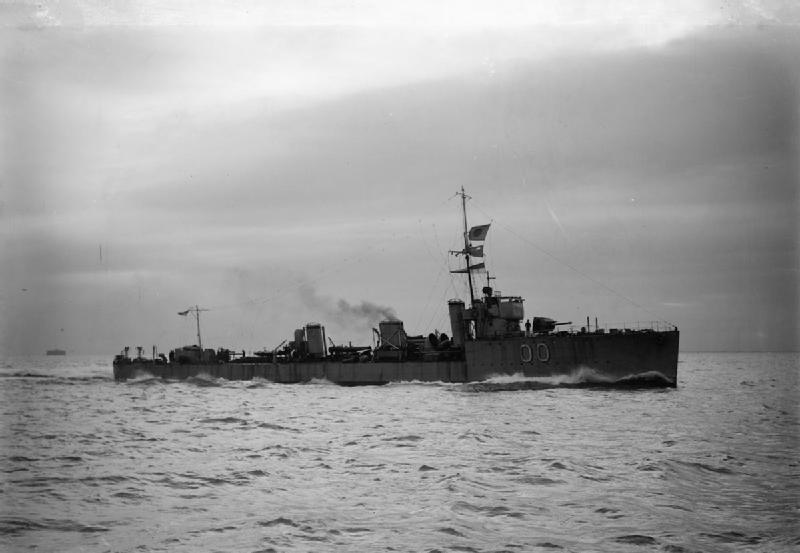
ACASTA

Fleet

Royal Navy

Ship Type

Destroyer

Nickname

–

Ship Class

Acasta class (K)

Grouping

4th Destroyer Flotilla (leader, HMS Tipperary, Captain C.J.Wintour)

Command

Grand Fleet

Builder's Yard

John Brown, Clydebank

Budget Year

–

Construction Notes

Originally designed as a K-class destroyer. Refitted June 1916.

Date Laid Down

01.12.1911

Launch Date

10.09.1912

Completed date

–

Commission date

–

Year laid down

1911

Year launched

1912

Year completed

–

Commission Year

–

Pennant No

G40, H59 (1914) and H00 (1918)

Photo Details

IWM_Q_020904.Public Domain. See also Copyright and Crown copyright artistic works. Engineer Lieutenant James Forrest. Acasta was able to effect some emergency repairs during the next six hours, but broke down again and was eventually taken in tow by HMS Nonsuch and reached Aberdeen two days after the battle, so badly damaged she practically had to be rebuilt.[

Related stories

HMS Acasta features in the Whyllie painting depictng HMS Iron Duke at Jutland opening fire on SMS König.

Sister ships

Achates, Ambuscade, Christopher, Contest, Fortune, Garland, Hardy, Midge, Owl, Porpoise, Shark, Sparrowhawk, Spitfire, Unity

Eventual Fate

Broken up 1921

Jutland result

Assigned to cover the 3rd BCS screening HMS Chester. She became disabled and refused help from HMS Shark. She'd been hit twice by Derfflinger.Between 18:44 and 18:47 Grand Fleet passed by. Sailors on deck of the Iron Duke cheered as they passed. Over the next six hours she was able to get some of the major repairs done. She broke down again and was eventually taken in tow by HMS Nonsuch and reached Aberdeen two days after the battle. Apparently she was so badly damaged she practically had to be rebuilt.

Ready for action after dock repairs

02.08.1916

Commander

Lieutenant-Commander John O. Barron

Noteable Officers

Fatalities included Engineer Lieutenant James Forrest, Chief Petty Officer Stoker Richard Massey, buried Anns Hill, Gosport, Chief Stoker G Howe, Engine Room Artificer James Bailey, buried Horsham, Stoker 1 Thomas William Nickless, Signalman Thomas Jordan, buried Craigton Cemetery, Glasgow.

Crew complement

77

Officers

–

Ratings

–

Killed

6

Wounded

1

Prisoners

7

Displacement full Load (tons)

984

Artefacts Data

–

Ship's Model

–

Length (ft)

267' 6"

Length (mtrs)

81.53

Beam (ft)

29' 9"

Beam (mtrs)

8.15

Draught (ft)

9' 6"

Draught (mtrs)

2.9

Max. Speed (knots)

32

Range (miles)

–

Range (kilometres)

–

Fuel

–

Propulsion

2 shaft Brown Curtiss steam turbines. Yarrow water tube boilers, giving 24,500 ihp

Armour Main Belt

–

Deck Armour

–

Turret Armour IN CM

–

Conning Tower Armour

–

Barbette Armour

–

Weight of armour

–

Armour / Displacement Ratio

–

Watertight compartments

–

General Notes

–

Fire Control Table

–

Fire Control - Clock

–

Primary Gun calibre

–

No. Primary Turrets

–

Guns (No.barrels)

–

Primary gun layout

–

Rounds per main gun

–

Effective broadside guns

–

Primary shell Weight (inches or cm)

–

Primary Broadside Weight

–

Secondary Gun Calibre

–

Guns (No.barrels) 2

–

Rounds per secondary

–

Other Armament

Three QF 4" Mk IV guns (101.6 mm), One QF 2 pdr Pom Pom Mk II gun

Elevation (degrees)

–

Gunnery Range (yards)

–

Gunnery Range (metres)

–

Rate of Fire (rds per minute)

–

Shells expended Main

–

Mines dropped

–

Shells expended Secondary

–

Torpedoes fired

–

Gunnery Notes

–

Torpedo Type IN

21"

No. tubes

2

Torpedo Type MM

533 mm

No. Mines

–

Torpedo Notes

single mounts

References & sources

–